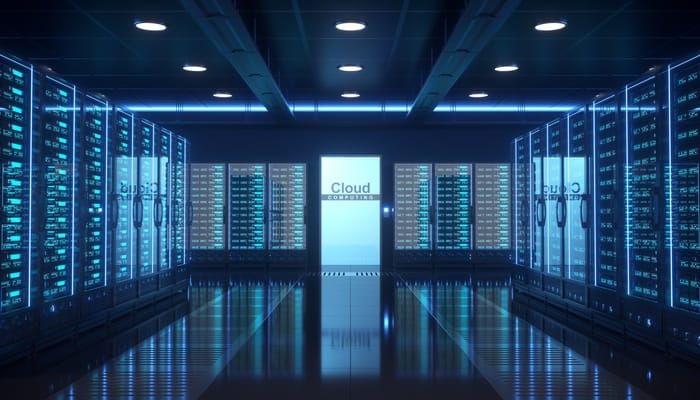
Remember when “Artificial Intelligence” was just a sci-fi movie trope? Now it’s writing poetry, generating images, and debugging code faster than any human. But this digital brain needs a physical body to live in. That body is the modern data center.
We need to examine how AI growth is reshaping data center design. It isn’t simply stacking more servers in a cold room anymore. We are talking about a complete architectural overhaul for the physical internet.
The Heat is On
AI chips run hot. We’re talking about “frying an egg on the sidewalk in July”- level heat. Traditional air conditioning systems simply can’t keep up with the massive thermal output of high-density GPU racks. Consequently, facility managers are replacing old HVAC systems with liquid cooling.
You might see direct-to-chip cooling plates or even total-immersion cooling, where servers take a bath in non-conductive fluid. It sounds messy, but it’s the only way to keep these silicon brains from melting down. The infrastructure has to change fundamentally to accommodate complex plumbing rather than simple ductwork.
Power Hungry Racks
Speaking of melting, let’s talk about electricity consumption. AI clusters are thirsty beasts that gulp down 50 kilowatts or more. This massive jump requires a total rethink of power distribution units. You can’t just plug these into a standard wall outlet and hope for the best.
Facility operators must upgrade everything from the grid connection down to the specific cords. That reality explains why data centers need reliable power whips for AI configurations. Without robust connections handling that electrical load, you risk downtime, and nobody wants their chatbot to go silent mid-conversation.
Location, Location, Latency
We used to hide data centers in the middle of nowhere, where land was cheap, and power was plentiful. That strategy doesn’t work as well for real-time AI applications. Latency is the new enemy. If your self-driving car has to ask a server three states away if that shape is a pedestrian or a mailbox, you have a problem.
Therefore, we are seeing a shift toward edge computing facilities. These are smaller, decentralized data centers located closer to the user. Architects aren’t just building massive warehouses anymore. They are designing compact, high-performance pods that seamlessly fit into urban environments.
The Future is Density
The physical internet is changing fast. It’s fascinating to watch concrete and steel adapt to neural networks’ needs. We are witnessing a construction revolution driven entirely by code.
Seeing how AI growth is reshaping data center design shows that software influences hardware just as much as hardware influences software. Keep an eye on those nondescript buildings you pass on the highway. They are evolving just as fast as the algorithms inside them.